Apollo e Dafne, 1971
GPO-0223
Apollo and Daphne
Pencil and collage on paper
Fifteen framed parts 29 x 42.3 cm each, overall dimensions variable
Titled on the recto of the twelfth sheet, centre: “Apollo / e Dafne”; signed and dated on the recto of the fourteenth sheet, centre: “Giulio Paolini / 1971”; titled, signed, and dated on the verso of each sheet, centre: “Giulio Paolini / Apollo e Dafne / 1971”
Private collection, Rome
The single sheets can be framed individually and displayed freely, with no pre-established indications, on one or more walls: in a horizontal row with intervals based on the amount of space available, in groups, or even in the manner of a picture gallery.
The sheets can also be gathered in a single, large plexiglas case, arranged in a grid of 3 x 5 units, with a sufficient amount of space (about 6-8 cm) around the four sides.
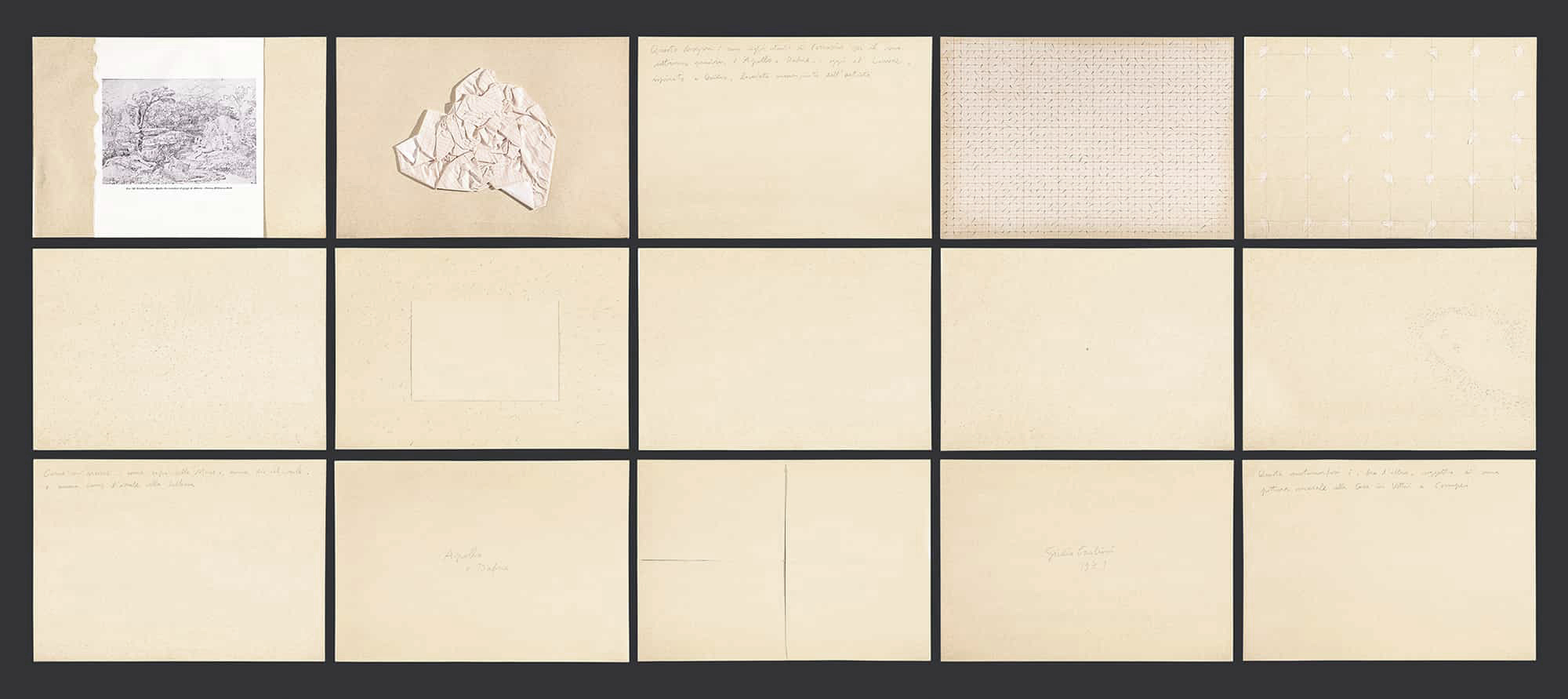
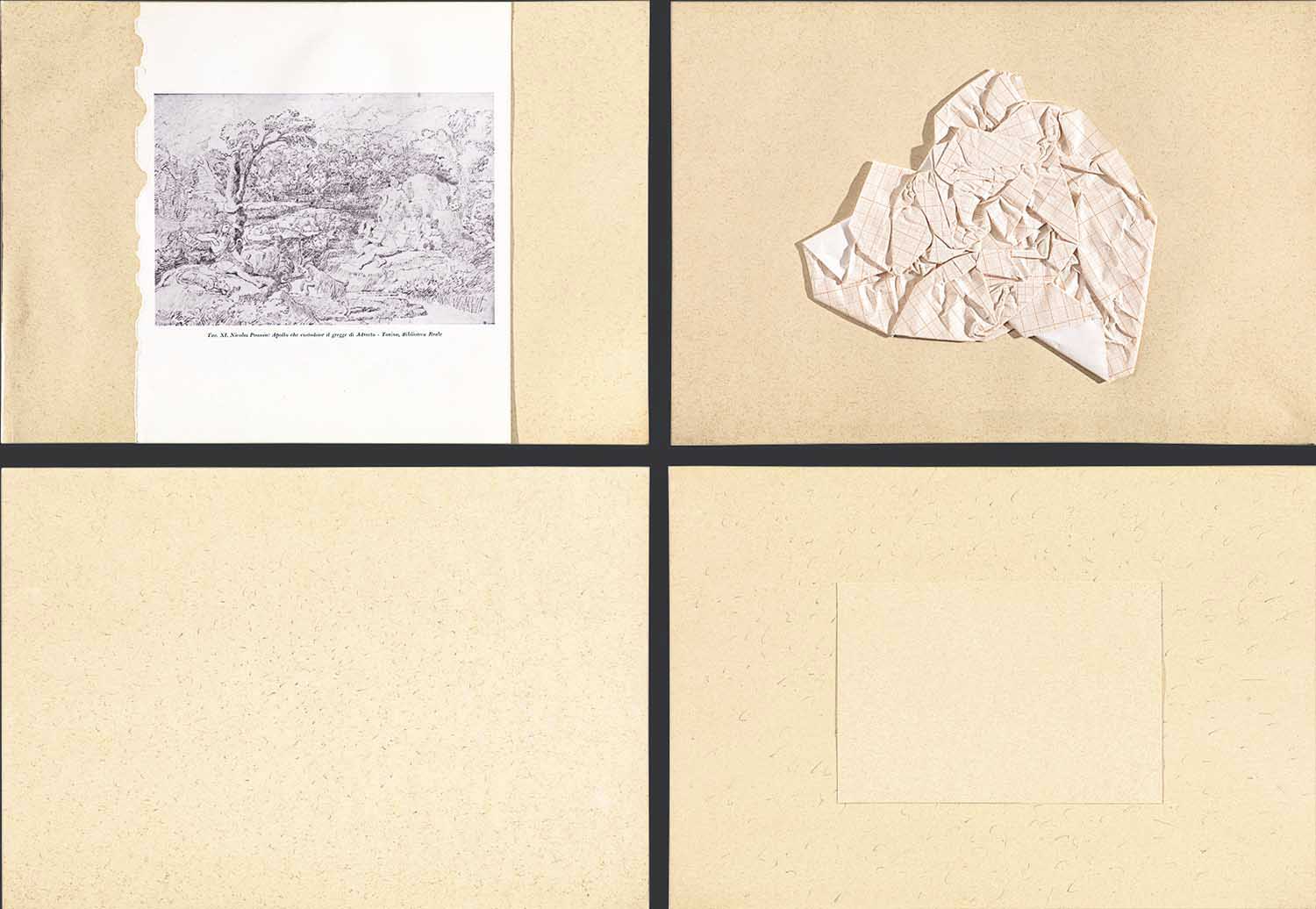
A common denominator of the fifteen "drawings" – as Paolini referred to them the first time they were exhibited – is the sheet of paper format, which alludes to the actual dimensions of the drawing by Nicolas Poussin featured in the first element of the sequence, in the torn image held down by a paper clip (the drawing, entitled Apollon gardant le troupeau d'Admète, is a preparatory study for the painting Apollon et Daphné, ca. 1664). The fifteen elements undergo a series of interventions of various kinds in pencil and collage, which as a whole verify a possible inventory of the potentials suggested by the surface of the sheet itself. The series is as follows:
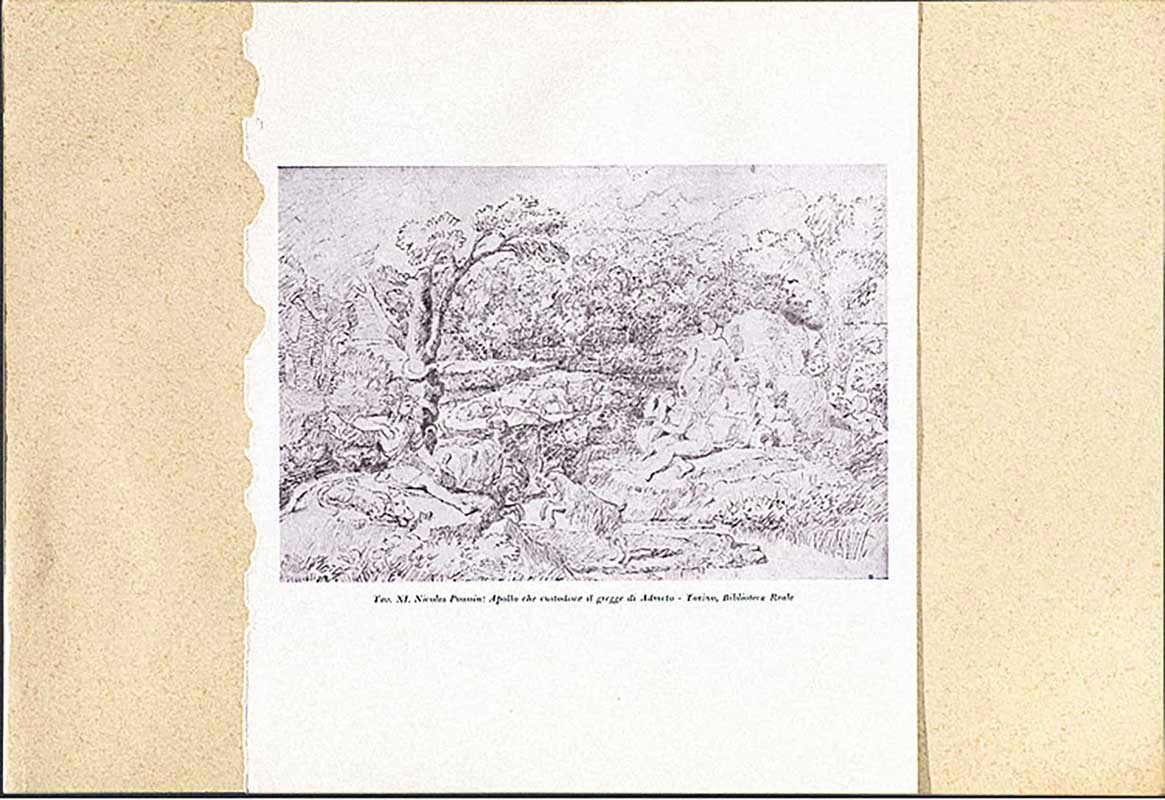
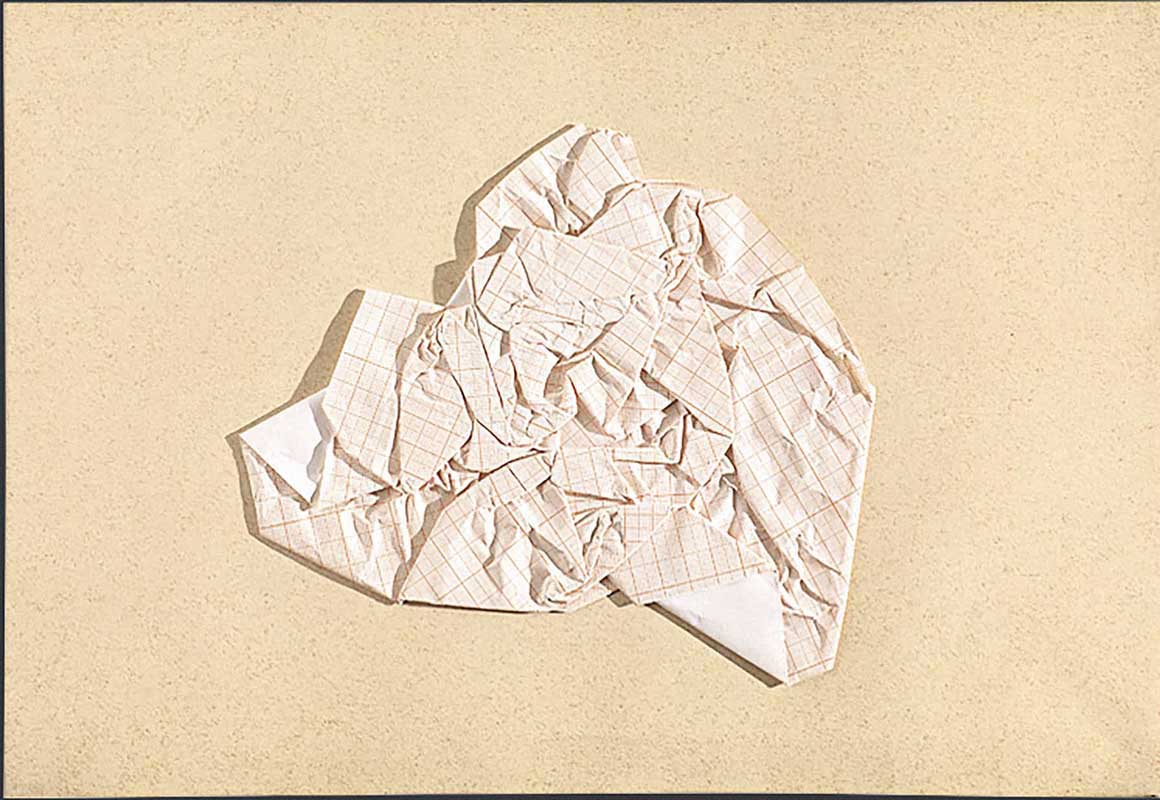
• second element: a sheet of graph paper of the same basic size crumpled so that it occupies the central portion of the sheet of drawing paper;
• third element: a note describing the drawing by Poussin written by hand at the top of a sheet of drawing paper: “Questo disegno è uno degli studi di Poussin per il suo / ultimo quadro l’“Apollo e Dafne”, oggi al Louvre, / ispirato a Ovidio, lasciato incompiuto dall’artista” [This drawing is one of Poussin's studies for his / last painting, the “Apollo and Daphne”, now in the Louvre, / inspired by Ovid, left unfinished by the artist];
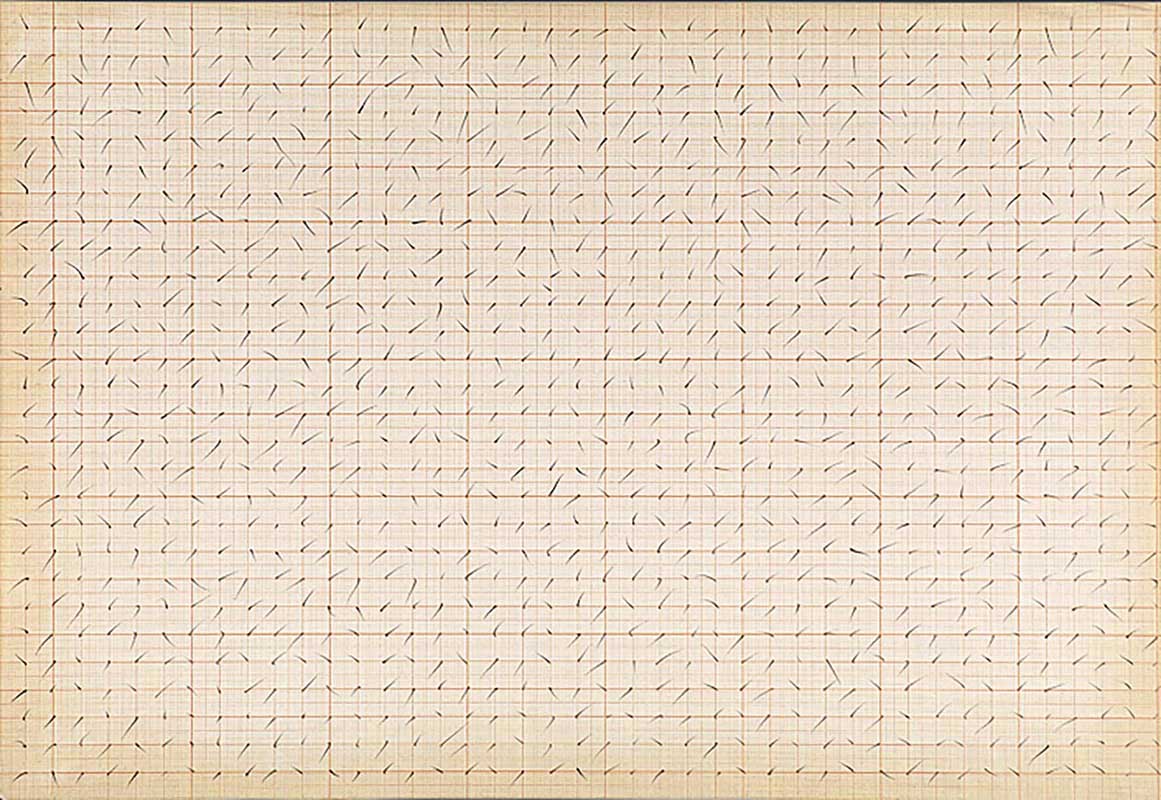
• fourth element: a sheet of graph paper with pencil marks in a regular pattern;
• fifth element: a sheet of drawing paper articulated by an orthogonal pattern in pencil, with small pieces of torn graph paper, applied to the areas where the grid intersects;
• sixth element: a sheet of drawing paper covered in tiny pencil marks;
• seventh element: a sheet of drawing paper with pencil marks made at random, covered in the middle by a white paper rectangle;
• eight element: a blank sheet of drawing paper;
• ninth element: a sheet of drawing paper with pencil tip marks in the middle;
• tenth element: the outline of the artist's hand while he is drawing, evoked on the right side of the sheet by a veil of pencil marks;
• eleventh element: words referring to Apollo, written by the artist at the top of the sheet of drawing paper: “Come un arciere, come capo delle Muse, come dio del sole, / o ancora come l’ideale della bellezza” [As an archer, as the leader of the Muses, as the Sun King, / or, again, as the ideal of beauty];
• twelth element: the title of the work written in the middle of the sheet (“Apollo / e Dafne”);
• thirteenth element: a sheet of drawing paper with four small white sheets placed close together so that they hide the surface (each paper unit is held down in one corner by one daub of glue);
• fourteenth element: a sheet of drawing paper with the artist's signature and the date of the work written in the middle ("Giulio Paolini / 1971");
• fifteenth element: a note written by the artist at the top of a sheet of drawing paper (“Questa metamorfosi è, fra l’altro, soggetto di una / pittura murale della Casa dei Vettii a Pompei” [This metamorphosis, is, among other things, the subject of a / wall painting in the House of the Vettii in Pompeii]), referred to the mythological subject of the drawing by Poussin, as well as, implicitly, to the "metamorphoses" that take turns occurring in the fifteen sheets of the work itself.
Nicolas Poussin, Apollon gardant le troupeau d'Admète, c. 1664, black stone and brown ink, Biblioteca Reale, Turin.
| 1971 | Turin, Libreria Stampatori, Giulio Paolini. Apollo e Dafne, 5-25 May; Brescia, Studio C, from 17 June. |
| 1973 | Rome, Sperone-Fischer, Giulio Paolini. Apollo e Dafne, from 24 February. |
| • | M. Bandini, “Giulio Paolini”, in NAC 6-7 (Milan), June-July, 1971, p. 43, not repr.; republished in Giulio Paolini 1960-1972, edited by G. Celant (Milan: Fondazione Prada, 2003), pp. 342, 344. |
| • | G. Brizio, “Giulio Paolini ovvero ‘quam raptim ad sublimia’”, in Graphicus 52, no. 10 (Turin), October, 1971, p. 37, not repr. |
| • | G. Celant, Giulio Paolini (New York: Sonnabend Press, 1972), pp. 117-118, repr. no. 83 pp. 90-91 (three elements); republished in Giulio Paolini 1960-1972, op. cit. (Milan: 2003), pp. 342-344; reprint (Cinisello Balsamo: Silvana Editoriale, 2019). |
| • | M. Fagiolo, “Glossario”, in Giulio Paolini (Parma: Università di Parma, Centro Studi e Archivio della Comunicazione, 1976), pp. 13-14, repr. nos. 137-139 (three elements). |
| • | Identité Italienne. L’art en Italie depuis 1959, edited by G. Celant (Paris-Florence: Centre Georges Pompidou and Centro Di, 1981), p. 355, not repr. |
| • | Roma in mostra 1970 1979. Materiali per la documentazione di mostre azioni performance dibattiti, edited by D. Lancioni (Rome: Edizioni Joyce & Co., 1995), cat. no. 236 p. 60, not repr. |
| • | Gian Enzo Sperone. Torino Roma New York 35 anni di mostre tra Europa e America (Turin: Hopefulmonster editore, 2000), vol. 1, p. 52, not repr.; vol. 2, p. 223, repr. (three elements). |
| • | Giulio Paolini 1960-1972, op. cit. (Milan: 2003), repr. pp. 343, 345 (two elements). |
| • | M. Disch, Giulio Paolini. Catalogo ragionato 1960-1999, vol. 1 (Milan: Skira editore, 2008), cat. no. 223 p. 231, repr. (three elements). |
| • | F. Bosco, "’Cambiare l'immagine’ e i disegni leonardeschi di Giuseppe Penone”, in Studi di Memofonte 21 (Florence), biannual online journal, 2018, p. 152, not repr. |
| • | S. Hecker, Apollo and Daphne: Luciano Fabro and the Feminine (Los Angeles: Artusa Press, 2024), p. 33, col. repr. no. 16. |

