Genius Loci, 1998-01
GPO-0856
Fibreglass
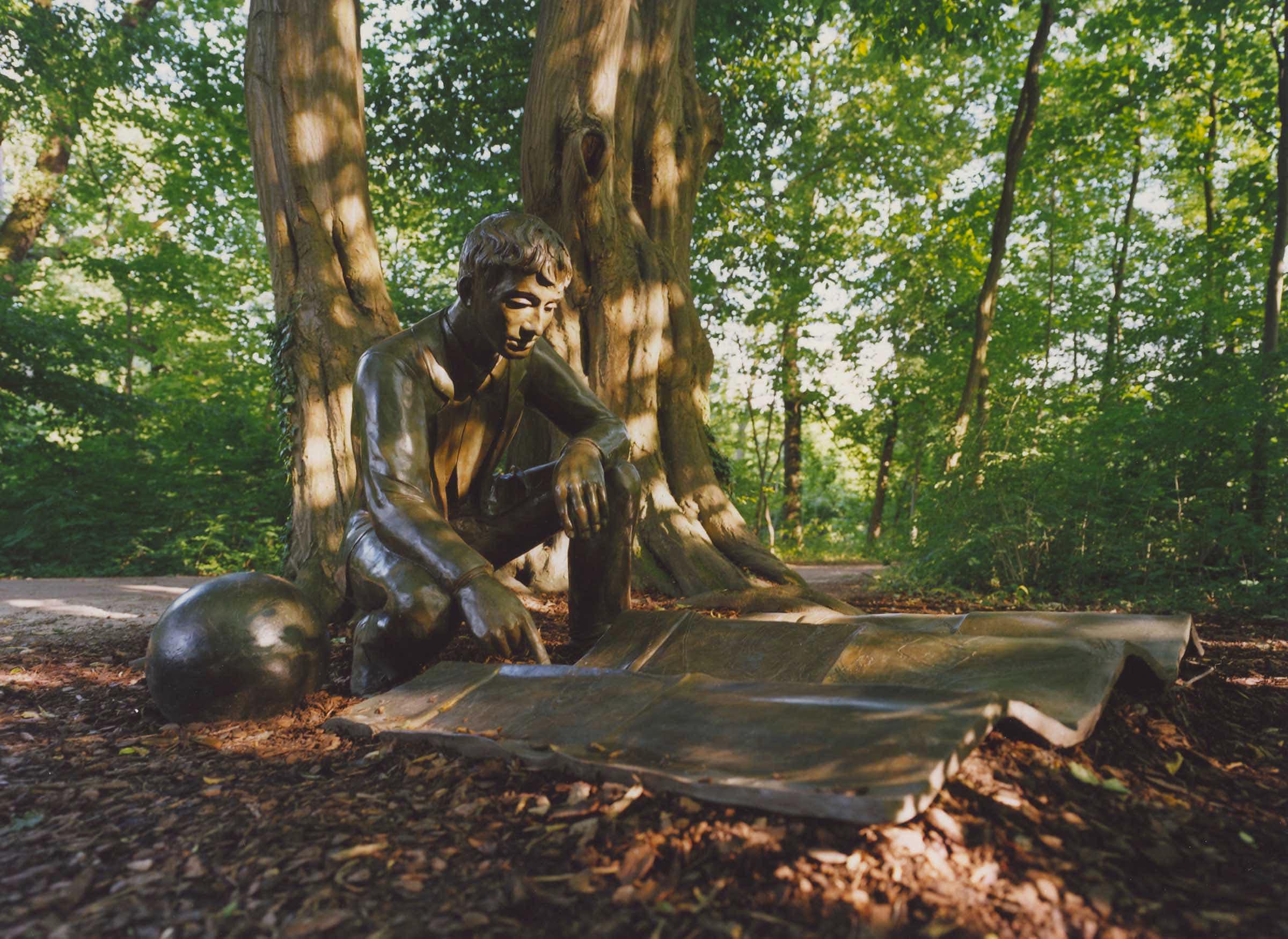
Part A: figure life-size cast, rectangular element 110 x 140 cm, sphere Ø 30 cm
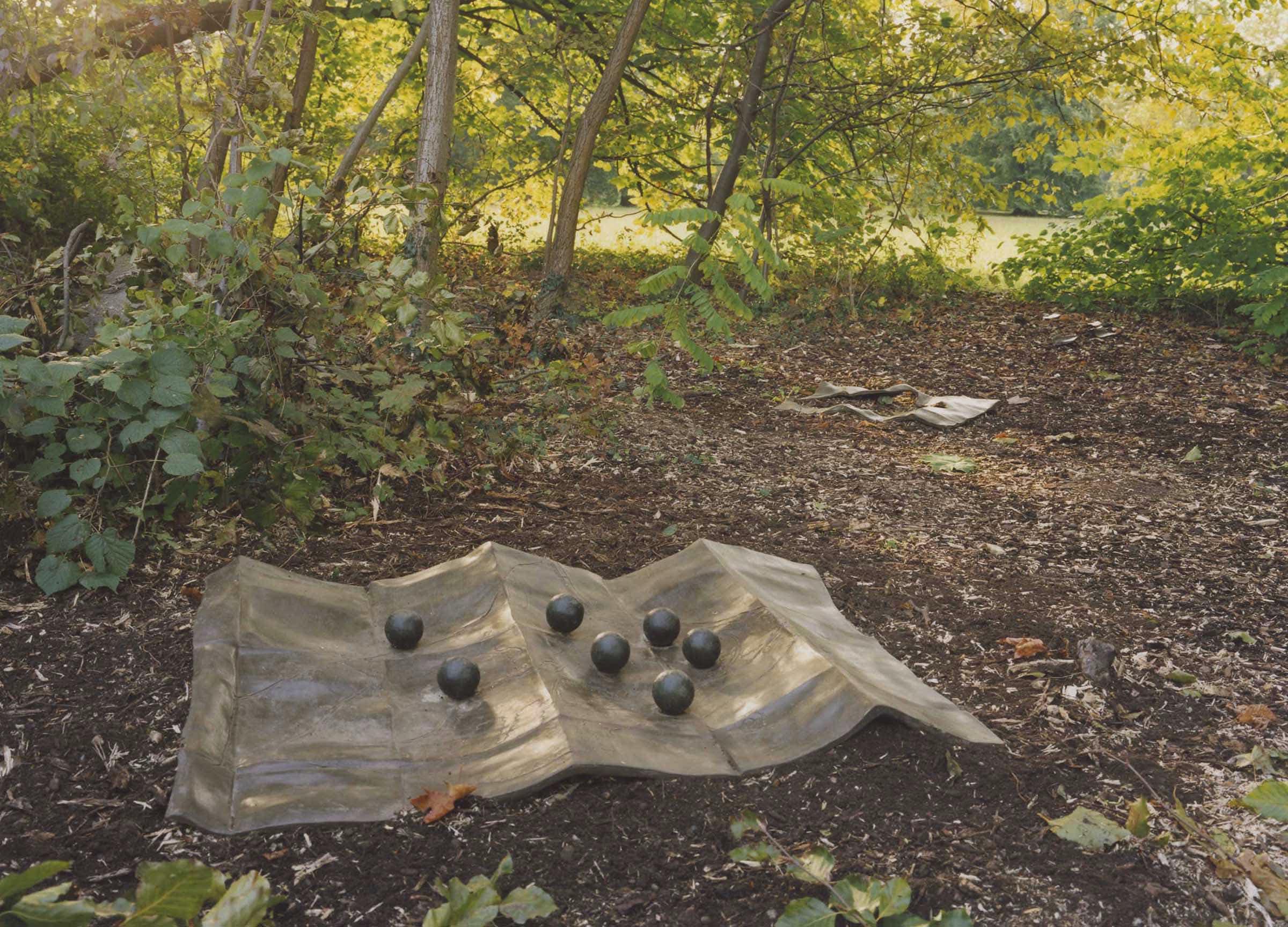
Part B: rectangular element 70 x 100 cm, seven spheres Ø 6 cm each
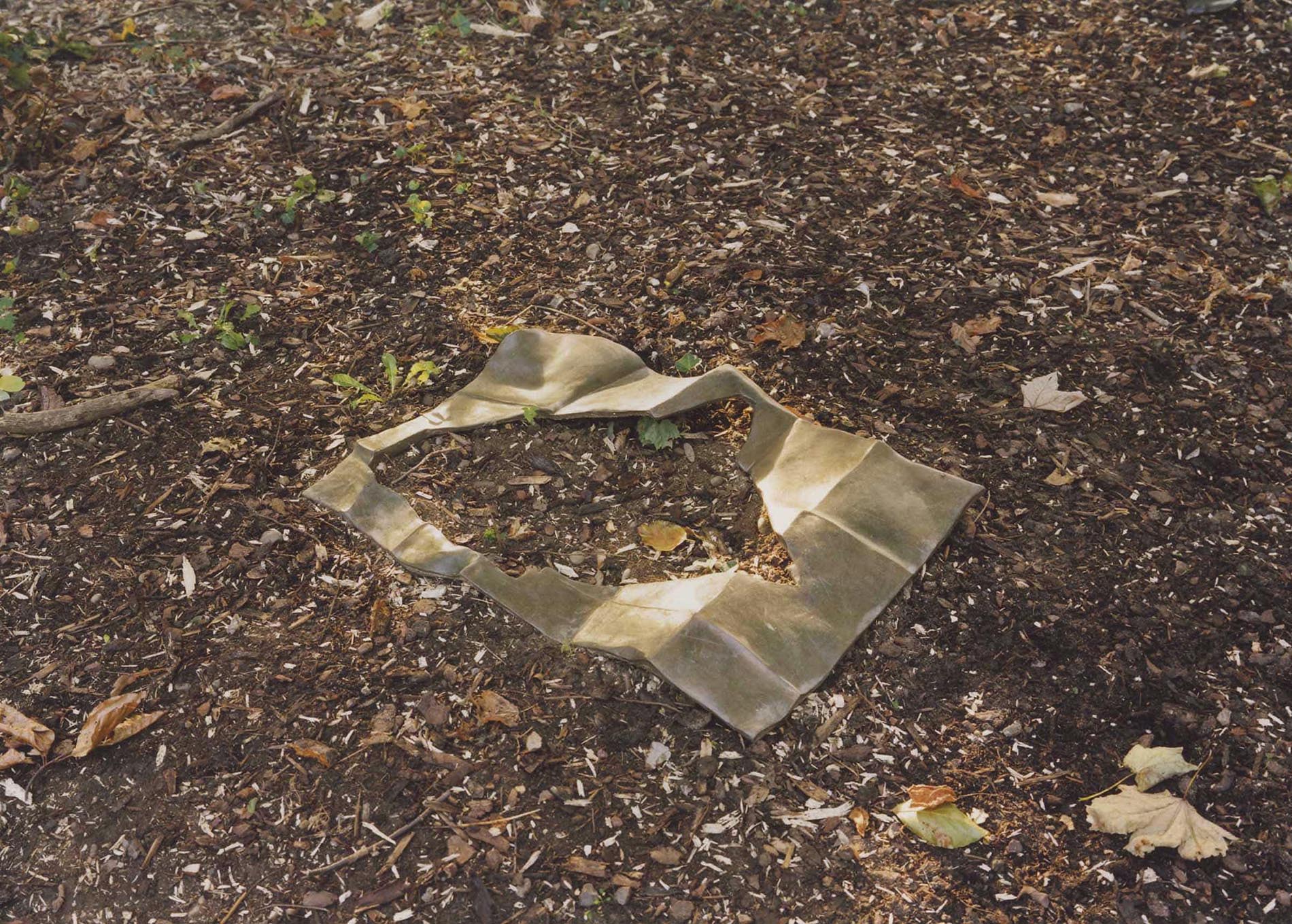
Part C: rectangular element 50 x 100 cm eroded in the central area
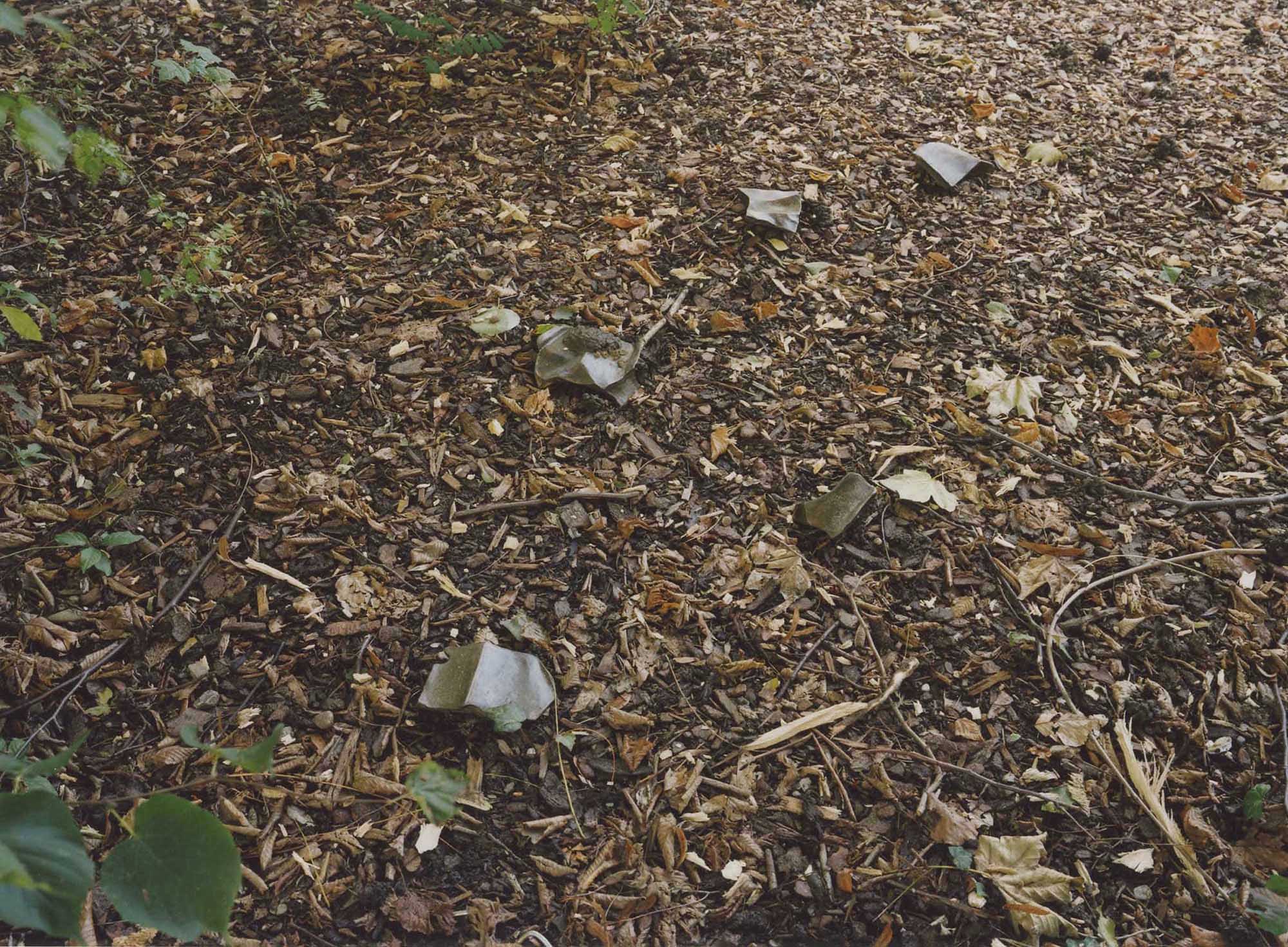
Part D: five irregular fragments spread in a ca. 35 x 50 cm area
CEEAC Centre Européen d’Actions Artistiques Contemporaines, Strasbourg
Acquired in 2001
The first permanent work made by Giulio Paolini for a natural site was commissioned from the artist by the CEAAC in early 1997 for the sculpture park of Pourtalès in Strasbourg (Parc du Château de Pourtalès, 161 rue Mélanie). The project was sent to the CEEAC in May 1998, it was completed in October 2000, and it was inaugurated in the summer of 2001. Repeated acts of vandalism led to the work’s relocation to an area of the park with better surveillance (2004), then to the restoration of the whole figure in 2010-11, and, lastly, to the substitution and consolidation of its hands (2012).
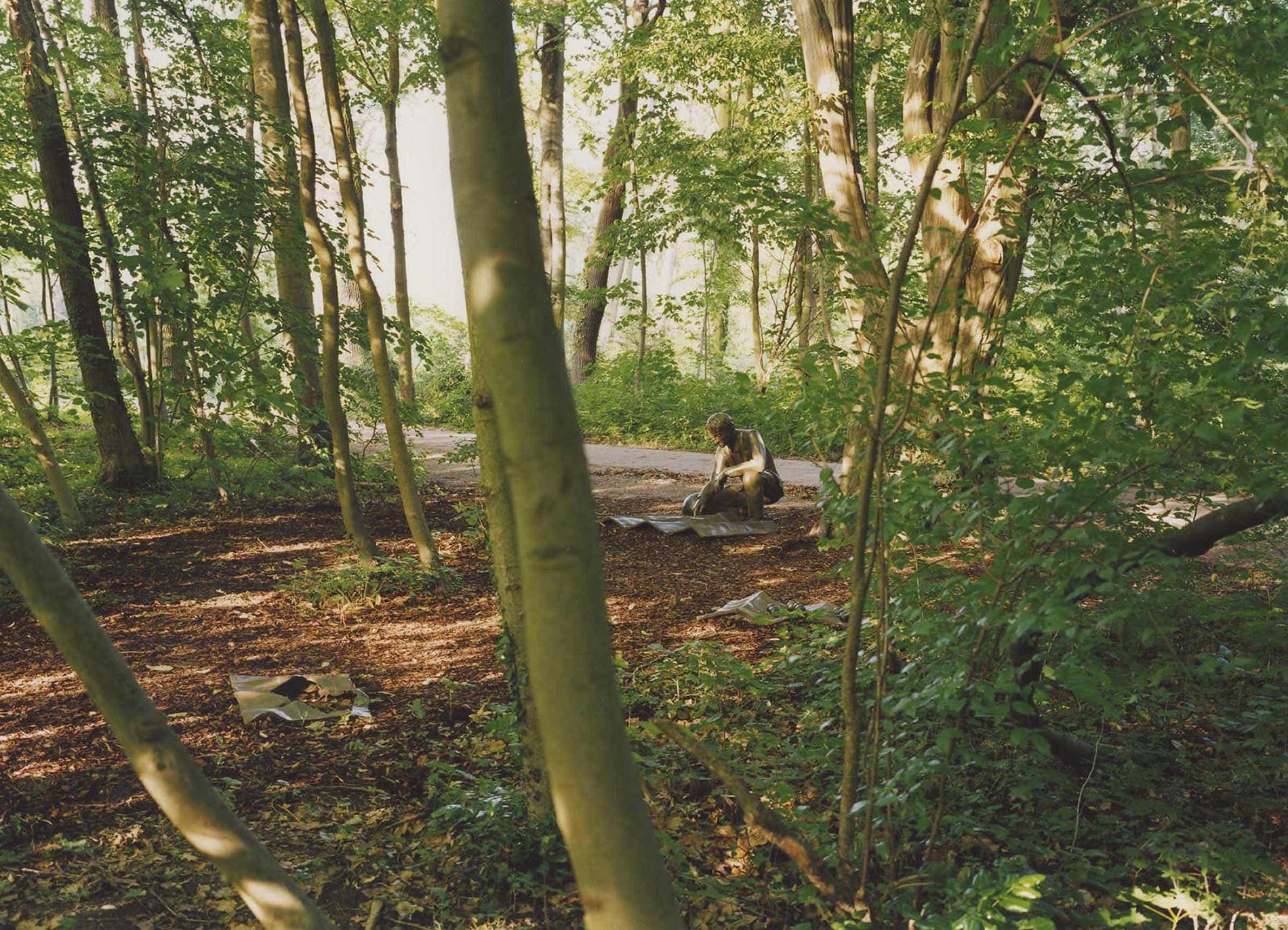
The fibreglass work consists of four episodes, situated at a certain distance apart from each other and gradually decreasing in size, thus suggesting a gradual distancing and a progressive fading away.
In the first episode (A) a life-size male figure wearing plain clothing is crouching on the ground and, with his right hand, pointing to a large drawing unfolding before him (the rectangular sheet maintains the folds and undulations of a sheet of paper); next to the figure is a sphere. On the drawing of the plan of the sculpture park the figure (a hypothetical stand-in for the artist) seeks the ideal site to locate his work, evoked by the sphere (symbolizing fulfilment).
The second episode (B) features the same plan unfolding on the ground, with seven small spheres recalling the sculptures of other artists already present in the park.1
In the third station (C) the sheet-map, which is further reduced in size, is eroded in the middle: through this void, which corresponds to the actual area of the park, nature bursts forth, that is to say, according to the artist: “it is the land itself, this time, that shows its ‘life-size’ dimensions, to prevail over the cartographic transcription: a tuft of grass, a real plant replace the ‘plan’ of the place”.2
The fourth and last stage (D) consists of five scattered fragments, which tend to become mixed in with the land, represent the only residues of the erosion that consumed the original plan.
The path from the first to the fourth episode, towards a gradual dispersion within the natural context (according to the spirit of “genius loci”), revolves around an absence: from the initial drawing to nature’s finally getting the upper hand, the work in fieri subtracts itself from its own fixation. From one scene to the next of this “‘natural’ history of art”, in the words of the artist, the initial hypothesis ends up fading away into an illusion: from not-yet to no-longer, the work remains a conjecture, a question on its own possible existence.
1 The correspondence between the spheres and the actual position of the sculptures in the plan is approximate: the spheres are placed in the positions that are technically most suited to their arrangement on an uneven surface. In a first version of the project, the artist had planned to install seven miniatures of the bent over figure instead of seven spheres. The sculptures that were already in the park when Paolini conceived his work are by Stephan Balkenhol, Jean-Marie Krauth, Claudio Parmiggiani, Barry Flanagan, Gaetano Pesce, Sarkis, Ernest Pignon-Ernest.
2 G. Paolini, Genius Loci. Appunti per una storia “naturale” dell’arte, 2001. The original version of the text, with some slight variants with respect to the work realized, relative to changes that were undertaken during the executive phase, is published in Giulio Paolini. Von heute bis gestern / Da oggi a ieri, exhibition catalogue, Graz, Neue Galerie am Landesmuseum Joanneum (Ostfildern-Ruit: Cantz Verlag 1998), p. 339.
| • | G. Paolini in Giulio Paolini. Von heute bis gestern / Da oggi a ieri, exhibition catalogue, Graz, Neue Galerie am Landesmuseum Joanneum (Ostfildern-Ruit: Cantz Verlag, 1998), p. 339. |
| • | Route de l'art contemporain en Alsace (Strasbourg: CEAAC Centre Européen d’Actions Artistiques Contemporaines, 2006), entry by P. Weiss p. 65, col. repr. |
| • | P. Guérin, “Pourtalès, jardin palimpseste”, in Novo 6 (Strasbourg), October 2012, p. 24, col. repr. p. 25. |
| • | P. Guérin, “À propos de ‘Genius Loci’ (Éléments pour une histoire ‘naturelle’ de l’art) de Giulio Paolini”, in Id., Exercices du regard (Strasbourg: Édition du CEAAC Centre Européen d’Actions Artistiques Contemporaines, 2013), pp. 107-113, col. repr. pp. 114-115. |

